
Studies show that more than 70% of employees need to develop new skills to stay competitive in today’s workplace.
Professionals now require additional skills to grow in their careers or even keep their current roles as technologies like generative AI continue to change how people work.
Businesses must constantly train their staff to stay productive and up to date with the upcoming years as industries change and technology advances.
Here's where "employee training program" really helps.
An employee training program is a strategic, structured set of activities designed to improve the job performance and professional growth of your workforce.
Many companies invest in training because it helps teams work more effectively, boosts engagement, and supports long-term business growth.
One of the most effective ways to build a training system is by following a structured framework.
In this guide, you’ll explore a practical introduction to the 7-step “Performance Architect” approach, a method organizations can use to build an effective and scalable employee training program.
What You’ll Learn:
- The "Why": The business case for modern employee training.
- The "How": A definitive 7-step roadmap to building your program.
- The "Tools": Top-rated platforms to manage and scale your training.
Importance of an Employee Training Program
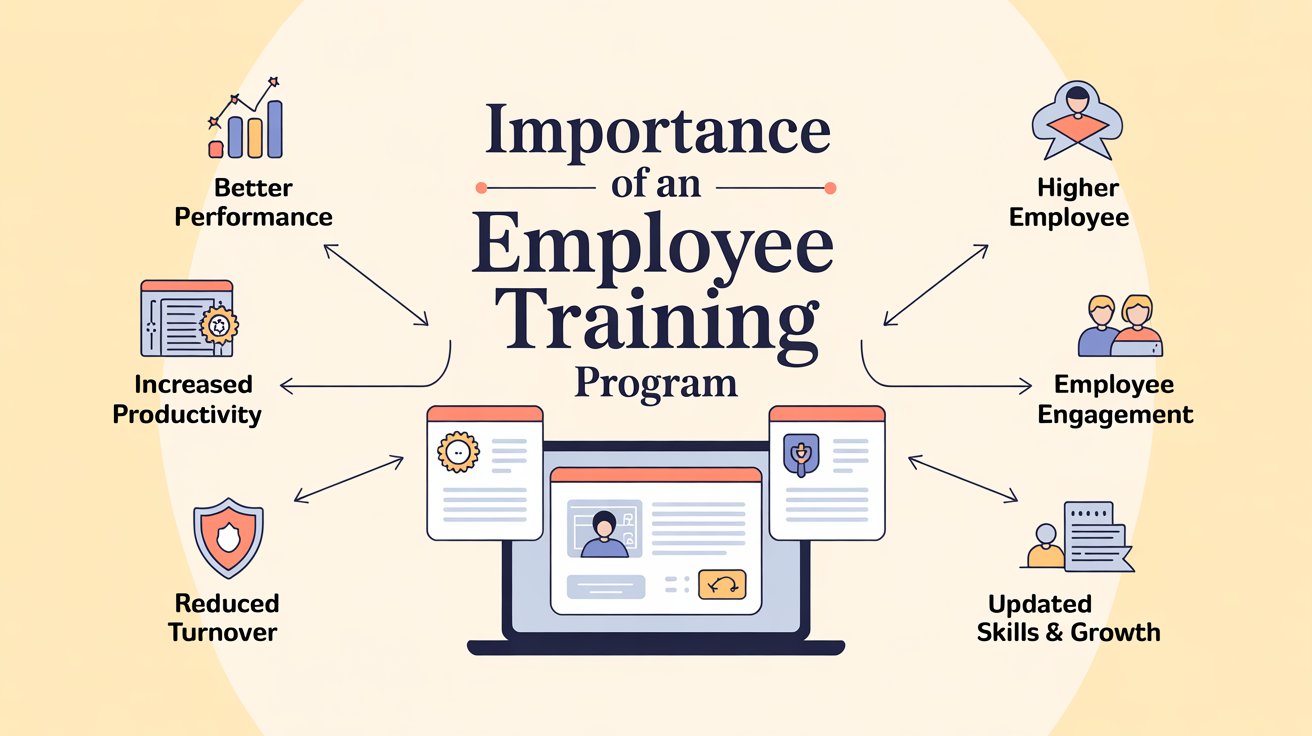
Before diving into the how, let's get clear on the why. A well-built training program isn't an HR department. A checkbox is a strategic investment that touches every part of your organization.
1. Improves Employee Performance
Training helps employees learn new skills and understand their responsibilities more clearly. When employees are well-trained, they can complete tasks more accurately and efficiently.
Well-trained employees also make fewer mistakes and can handle challenges more effectively.
2. Increases Productivity
Employees who receive proper training often work faster and more accurately. They understand workflows, tools, and expectations, which helps reduce delays and operational inefficiencies.
This increased productivity can significantly improve overall business performance.
3. Boosts Employee Engagement
Employees want opportunities to grow and develop their careers. Offering training programs shows that a company values its workforce and is willing to invest in its success.
As a result, the employees feel more motivated, satisfied, and committed to their work.
4. Reduces Employee Turnover
Organizations that invest in professional development tend to retain employees longer. Workers are more likely to stay with companies that provide career growth opportunities and skill development.
Lower turnover also reduces recruitment and onboarding costs.
5. Keeps Skills Updated
Industries are constantly evolving due to new technologies and changing market demands. Training programs ensure that employees stay updated with the latest tools, processes, and industry trends.
This helps organizations remain competitive and innovative.
How to Develop an Employee Training Program: 7 Key Steps
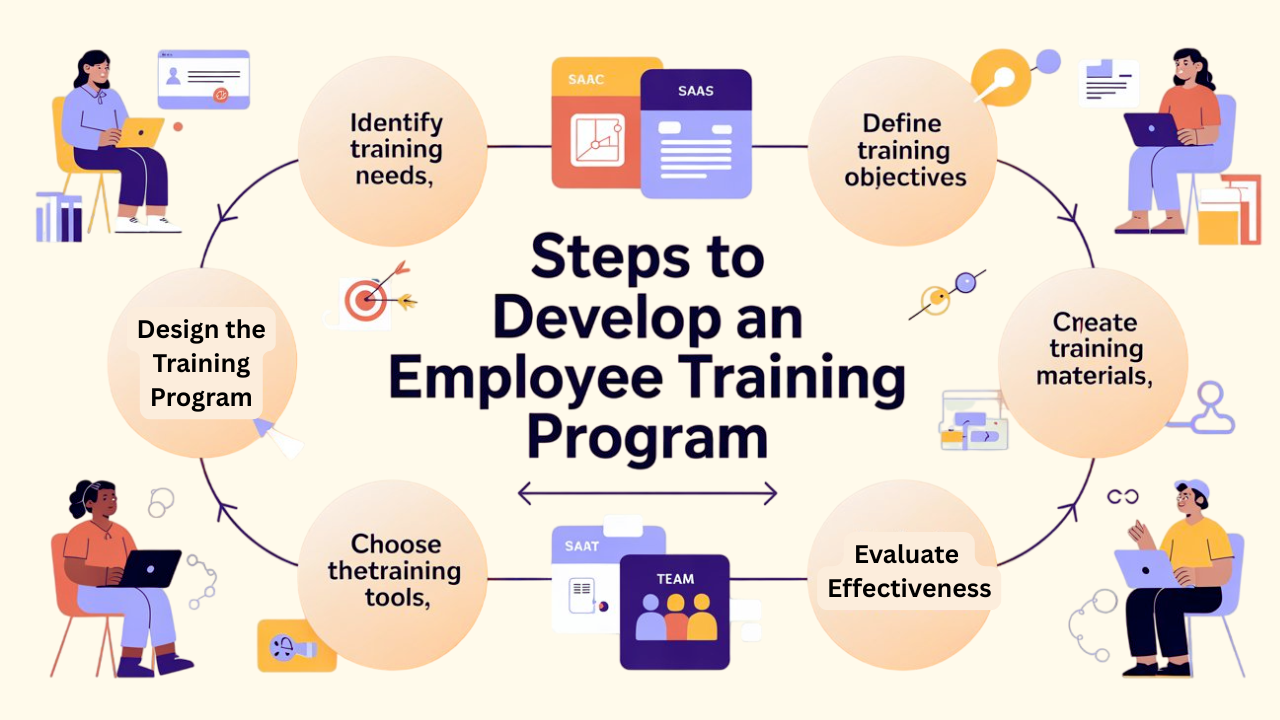
Building an effective training program requires careful planning and structured implementation. Below are the seven essential steps businesses can follow.
Step 1: Identify Training Needs
The first step in building a training program is understanding what skills employees need to develop. Businesses should:
- Analyze skill gaps within the organization
- Conduct employee surveys and interviews
- Review performance evaluations
- Identify business goals and required competencies
Companies can create training programs that address real-world issues by having a clear understanding of the gap between current and necessary skills.
Step 2: Define Clear Training Objectives
Once training needs are identified, set SMART goals that align with business objectives.
For example, an organization may aim to improve CRM usage accuracy, reduce data entry errors by 40%, and achieve these results within 60 days of training.
Clear objectives make it easier to measure progress and evaluate the success of employee training programs.
Step 3: Design the employee training program
The businesses and organizations should then create the framework for the staff training program. This includes:
- Choosing training formats such as online courses, workshops, mentoring, or coaching
- Creating a structured learning curriculum
- Developing engaging learning experiences
Many companies now use blended learning, which combines digital learning with hands-on training sessions.
Step 4: Create Employee Training Materials
Training materials play a crucial role in ensuring employees understand and retain information. Regarding these employees, businesses ought to:
- Instructional guides and manuals
- Slide presentations and learning documents
- Training videos and tutorials
- Quizzes and assessments
- Real-world case studies
Employees are better able to retain information and use it in real-world scenarios thanks to interactive content like case studies, simulations, and quizzes.
Step 5: Choose the Right Training Tools
Modern training programs rely on technology to deliver, manage, and track learning activities. Organizations should choose platforms that support:
- Course creation
- Employee progress tracking
- Assessments and certifications
- Reporting and analytics
Scaling learning initiatives and measuring outcomes are made simpler with appropriate employee training programs.
Step 6: Implement the Training Program
After planning and preparation, it is time to launch the training program. Key steps include:
- Scheduling training sessions
- Communicating expectations to employees
- Providing access to learning materials
- Ensuring managers support the training process
Management support is critical because leaders encourage participation and help employees apply new skills at work.
Step 7: Evaluate Training Effectiveness
The final step is measuring the success of the training program, and organizations should evaluate:
- Employee feedback through surveys
- Performance improvements after training
- Productivity or efficiency changes
- Training ROI (return on investment)
Regular evaluation helps companies improve their training strategies and ensure they continue delivering value.
Top 5 Tools for Employee Training Programs
Using the right training platform can significantly improve the efficiency and effectiveness of employee learning initiatives. Below are five popular tools used by organizations worldwide.
1. CourseFunnels
Summary

You have complete control over your content and learner data when Coursefunnels is installed on your own hosting, and there are no per-user costs.
The platform combines course creation, training delivery, marketing funnels, and email automation, making it ideal for both internal employee training and external courses.
Key Benefits
➕ Easy course creation and management
➕ Built-in sales funnels and learning management tools
➕ Supports videos, quizzes, and course modules
➕ Simple interface for training delivery
Ideal User
Small businesses, course creators, and companies that want to build structured internal training programs.
2. TalentLMS
Summary

A cloud-based learning management system called TalentLMS was created for business training.
Known for its simple interface and quick setup, it allows organizations to manage employee onboarding, compliance training, and skill development from one centralized platform.
Key Benefits:
➕ Advanced reporting and analytics to track learner progress
➕ Integrates with tools like Zoom, Salesforce, Slack, and 200+ apps
➕ Built-in gamification features such as points, badges, and leaderboards
➕ White-label branding options for businesses
Ideal User
Small to medium-sized businesses looking for an easy-to-use and scalable LMS for employee onboarding, compliance training, and team development.
3. Moodle
Summary

One of the most popular open-source learning management systems (LMS) in the world, Moodle supports training programs in more nations.
Because Moodle provides unparalleled customization and requires more setup than plug-and-play platforms, it is a popular choice for organizations looking for flexibility without paying for licensing.
Key Benefits:
➕ Simple course creation tools
➕ Detailed analytics and reporting
➕ Mobile-friendly learning experience
➕ Supports gamification features
➕ Built-in forums, wikis, and collaboration
Ideal User
Educational institutions, large organizations with in-house IT teams, and a flexible and customizable LMS without licensing
4. Coursera for Business
Summary

With courses developed in collaboration, Coursera for Business gives businesses access to one of the biggest online learning resources.
Instead of building employee training program content from scratch, companies can quickly assign high-quality courses on topics like data science, leadership, AI, project management, and communication.
Key Benefits:
➕ Admin dashboard to assign courses and track progress
➕ Skills benchmarking to identify team skill gaps
➕ Hands-on projects and assessments for practical learning
➕ Regularly updated content to keep skills current
Ideal For:
Mid-to-large enterprises focused on professional upskilling, leadership development, and technical training, especially in areas like technology.
5. SAP Litmos
Summary

Many global organizations use SAP Litmos, a learning management system (LMS), for compliance training, employee development, and customer education.
It includes a library of ready-made courses covering topics such as workplace safety, data privacy, anti-harassment, and sales training, allowing companies to launch training programs quickly.
Key Benefits:
➕ Advanced reporting and compliance tracking tools
➕ Multi-language support for global teams
➕ Mobile-friendly platform with offline learning capabilities
➕ Integrates with business systems
Ideal For:
Mid-to-large enterprises in compliance-focused industries such as healthcare, finance, retail, and manufacturing
Conclusion
A strong employee training program is not a one-time task. It is an ongoing system that helps your team learn, improve, and grow over time.
When training is planned and implemented well, it can boost productivity, increase employee retention, and support long-term business growth.
When it comes to training platforms, CourseFunnels stands out as a strong option for organizations that want full control over their training system without ongoing SaaS costs.
But the core idea is simple: invest in your people. Organizations that support continuous learning build teams that are more skilled, creative, and committed to success.
The companies leading their industries didn’t just hire talented employees, they created systems that help their teams keep growing.
You have the turn now.
FAQs about Employee Training Programs
Q: What is an employee training program?
Ans: An employee training program is a structured system designed to improve employees' skills, knowledge, and performance through organized learning activities.
It may include onboarding, skills training, compliance education, leadership development, and ongoing professional growth initiatives.
Q: What's the most effective training method?
Ans: Blended learning, combining online modules with live instruction, real-world practice, and reinforcement activities, consistently outperforms any single-format approach. Incorporating gamification and microlearning further improves engagement and retention.
Q: What is the best LMS for small businesses?
Ans: For small businesses, CourseFunnels offers exceptional value with its low yearly price and all-in-one features. Another excellent option is TalentLMS because of its user-friendliness and free entry-level plan. Both allow small teams to launch professional employee training programs.
Q: How often should employee training programs be updated?
Ans: At a minimum, annual reviews of all training content are recommended. For fast-moving fields (technology, compliance, sales), quarterly updates may be necessary.
Build a feedback loop using LMS data and employee surveys to identify content that needs refreshing.